
Micro-arc oxidation special power supplies are special power supply devices based on plasma electrolytic oxidation technology, primarily achieving ceramic layer formation on metal surfaces through electrical breakdown. The origins of this technology can be traced back to Betz's first observation of electrical breakdown in 1932, and its theoretical model has undergone four development stages: ion current mechanism, thermal mechanism, mechanical mechanism, and electron avalanche mechanism. The power supply system consists of core modules such as a three-phase rectifier circuit, a chopper power regulation circuit, and an IGBT inverter circuit, and can achieve constant voltage/constant current/constant power control.
The development of this power supply technology began with the development of thyristors by General Electric in 1958. After iterations with devices such as GTOs, GTRs, and MOSFETs, it has formed the third-generation IGBT technology system. The system adopts a composite power conversion topology, achieving parameter adjustment through pre-stage voltage regulation and post-stage waveform control, and can output independently adjustable bidirectional asymmetric pulses from ±0-500V. Its control unit is based on an Intel 80C196KC microcontroller, integrating sensor acquisition, A/D conversion, and digital PID control functions.
Industry Introduction: Micro-arc oxidation (MAO), also known as micro-plasma oxidation (MPO), anodic spark deposition (ASD), or spark discharge anodizing (ANOF), is sometimes referred to as plasma-enhanced electrochemical surface ceramization (PECC). The basic principle and characteristics of this technology are: based on ordinary anodizing, it utilizes arc discharge to enhance and activate the reaction occurring on the anode, thereby forming a high-quality reinforced ceramic film on the surface of workpieces made of aluminum, titanium, magnesium, and their alloys.
Compared with traditional anodizing, the main characteristics of micro-arc oxidation technology are: significantly improved surface hardness of the material; good wear resistance, good heat resistance, and corrosion resistance; good insulation properties; environmentally friendly solutions; stable and reliable process; simple equipment; convenient operation and easy to master; in-situ growth of ceramic films on the substrate, resulting in dense, uniform, and firmly bonded films; and high flexibility.
Product Introduction:
The main components of a micro-arc oxidation production line include: a dedicated power supply for micro-arc oxidation, a tank assembly, a circulating cooling system, a stirring system, and a guide rail trolley (optional).
Features of Micro-arc Oxidation Power Supply Equipment: Equipped with an LCD/touchscreen display for automatic control and setting; online programmable; processing time accurate to the second; constant current and constant voltage output modes with seamless automatic switching; the number of positive and negative pulses can be set independently; positive and negative DC output current and voltage can be continuously and arbitrarily set within the design range; positive and negative pulse widths are individually adjustable; pulse frequency range can be set between 100-2000Hz; internal electrical components are cooled by circulating water and air, ensuring safety and reliability; features protection against short circuits, overcurrent, overvoltage, overheating, phase loss, and water shortage.
Components of a Micro-arc Oxidation Production Line: Micro-arc oxidation dedicated power supply, tank assembly, circulating cooling system, stirring system, and optional guide rail trolley system.
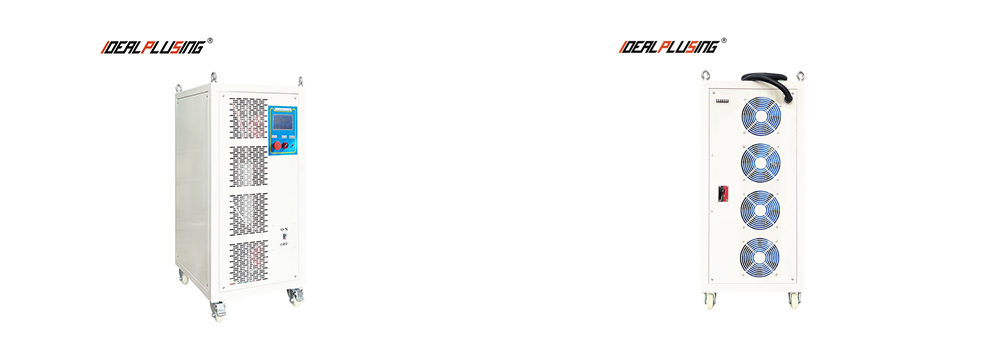
Micro-arc oxidation power supply equipment features: (Specifications: 120A, 180A, 200A, 240A, 280A, 350A, 500A)
• Equipped with an LCD/touchscreen display, automatic control, allowing arbitrary setting of processing current, voltage, frequency, duty cycle, time, waveform combinations, and related process parameters.
• Features online programmability, with process parameter storage and recall functions; unipolar and bipolar output modes can be arbitrarily set. (Process is automatically controlled by DSP)
• Processing time can be selected between 0-999 minutes, accurate to the second.
• Offers constant current and constant voltage output modes; can automatically switch between constant current and constant voltage online without disturbance.
• The number of positive and negative pulses can be set individually; the setting range for the number of positive and negative pulses is 1-100 and 0-20.
• Maximum positive DC output: Current/Voltage = 500A/750V; Maximum negative DC output: Current/Voltage = 500A/300V; Current and voltage can be continuously and arbitrarily set within the design range.
• Positive and negative pulse widths are individually adjustable, with duty cycles adjustable between 10% and 95%.
• Pulse frequency range can be set between 100-2000Hz.
• Internal electrical components of the power supply are cooled by circulating water and air, ensuring safety and reliability.
• Features protection measures against short circuits, overcurrent, overvoltage, overheating, phase loss, and water shortage.
Influence of Micro-arc Oxidation Power Supply
In recent years, research on micro-arc oxidation processes has mainly focused on the influence of process factors such as current density, electrolyte composition, power supply mode, and substrate composition on the thickness, structure, and performance of the oxide film. It has been pointed out that current density has a decisive influence on the thickness of the micro-arc oxidation film. In an electrolyte containing 6% water glass, using industrial AC power, 60 micro-arc oxidation experiments were conducted on several different aluminum alloys, with current densities ranging from 1 to 50 A/cm², depending on the geometry and size of the parts. The results showed a linear relationship between the oxide film thickness and the current density; the higher the current density, the thicker the film. Ultimately, ceramic oxide films with a thickness exceeding 120 μm were obtained. However, the selection of the micro-arc oxidation current density must be combined with other process conditions and performance requirements. These process conditions include electrolyte composition and temperature, substrate composition, and power supply mode. Micro-arc oxidation breaks through the limitations of traditional anodizing by applying a very high voltage between electrodes to induce micro-arc discharge on the electrode surface immersed in the electrolyte. The voltage level is one of the main factors affecting micro-arc oxidation. Experiments show that different solutions have different voltage operating ranges. If the voltage is too low, the ceramic layer growth rate is slow, the ceramic layer is thin, the color is light, and the hardness is low; if the operating voltage is too high, the workpiece is prone to ablation, and the resulting ceramic layer has poor density and uneven thickness. As research progresses, it has been discovered that pulsed power supplies can improve membrane quality. Many research institutions have found that power supplies with adjustable positive and negative voltages and deficit ratios can improve the microstructure of membranes.
Overview of the Development of High-Power Pulse Power Supplies
In switch-mode power supplies, magnetic components (such as iron-core inductors, transformers, etc.), relays, and mechanical switches are often used to achieve AC/DC side filtering, energy storage, and transmission. These magnetic components and mechanical switches account for a large proportion of the size, weight, and cost of the power supply unit. Therefore, the power supply is large, bulky, and noisy, and it is difficult to increase the operating frequency of the switching devices. The switching devices in traditional 1MW converters operate in a hard-switching state. Hard-switching has four major drawbacks that hinder the increase of the operating frequency of the switching devices.
1. High turn-on and turn-off losses. During turn-on, the current rise and voltage drop of the switching device occur simultaneously; during turn-off, the voltage rise and current drop occur simultaneously. The overlap of voltage and current waveforms causes the turn-on and turn-off losses of the device to increase with the increase of the switching frequency.
2. Inertial turn-off problem. Circuits inevitably contain inductive components (parasitic inductance such as lead inductance and transformer leakage inductance, or physical inductance). When a switching device is turned off, due to the large di/d ratio of the component, a very high peak voltage is induced across the switching device, easily causing voltage breakdown.
3. Capacitive turn-on problem. When a switching device is turned on at a very high voltage, the energy stored in the junction capacitance of the switching device will be completely dissipated within the switching device, causing overheating and damage.
4. Diode reverse recovery problem. When a diode changes from conduction to cutoff, there is a reverse recovery period. During this period, the diode is still in the conducting state. If the switching device connected in series with it is turned on immediately, it can easily cause a momentary short circuit in the DC power supply, generating a large inrush current. This can cause a sharp increase in power consumption of both the switching device and the diode. Adding excessive force can damage the device. These issues have hindered the development of switching power supplies.
With advancements in soft-switching and power electronics technologies, an effective way to overcome these shortcomings is to adopt soft-switching technology. The ideal soft-switching process involves the voltage first dropping to zero, followed by a slow rise in current to the on-state value, resulting in near-zero turn-on losses. Furthermore, since the voltage has already dropped to zero before the device turns on, the voltage across the collector capacitor is also zero, thus solving the capacitive turn-on problem. This means the diode has already been cut off, and its reverse recovery process is complete; therefore, the diode reverse recovery problem also disappears. The ideal soft-turn-off process involves the current first dropping to zero... The voltage drops to zero and then slowly rises back to the off-state value, so the turn-off loss is approximately zero. Since the current has dropped to zero before the device turns off, meaning the current in the line inductance is also zero, the inductive turn-off problem is solved. Therefore, soft-switching technology can solve the switching loss problem, capacitive turn-on problem, inductive turn-off problem, and diode reverse polarity problem in hard-switching PWM converters. Power electronics technology and soft-switching technology have promoted the development of high-power power supplies, but the performance of high-power power supply technology still needs further research.
In 1958, General Electric Company in the United States developed the first industrial-grade thyristor, greatly expanding the semiconductor... The expansion of power control capabilities for electronic devices marked the transition of electrical energy conversion and control from rotating power converters and stationary ion converters to the era of power semiconductor devices, signifying the arrival of the power electronics era. Thyristors, being semi-controlled devices that cannot turn off automatically, belong to the first generation of power electronic devices. Due to their small size, low power consumption, and fast response speed, power electronic devices have experienced rapid development since their inception. The emergence of low-power turn-off thyristors (GTOs), fully controlled devices, alongside power transistors (GTRs) and field transistors (MOSFETs) further spurred this trend. These are known as second-generation power electronic devices. In the late 1980s, composite devices represented by the Insulated Gate Bipolar Transistor (IGBT) emerged. These devices use MOSFETs to drive bipolar transistors, combining the high input impedance of MOSFETs with the low on-resistance of GTRs, and are considered the most promising third-generation power electronic devices. Simultaneously, digital control technology also developed rapidly. The integration of power technology and control technology promoted the development of power supplies. Compared to digital control, analog control has the following disadvantages:
1. Analog control circuits have more components, resulting in a larger power supply size.
2. Insufficient flexibility; once the circuit design is completed, the control strategy cannot be changed.
3. Most importantly, power supplies are difficult to debug, and parameters are inconsistent. Due to the differences in the characteristics and parameters of the components used, there are significant differences in characteristics between power supplies, resulting in poor consistency. In contrast, power supplies using microcontrollers and DSP processors offer convenient and flexible control. Control strategies can be easily changed by rewriting the system software. At the same time, the power supplies have high precision, significantly reducing the number of control components and greatly reducing the size of the power supply. Digital circuits have good stability, thus increasing the stability and consistency of the power supply.
Share our interesting knowledge and stories on social media