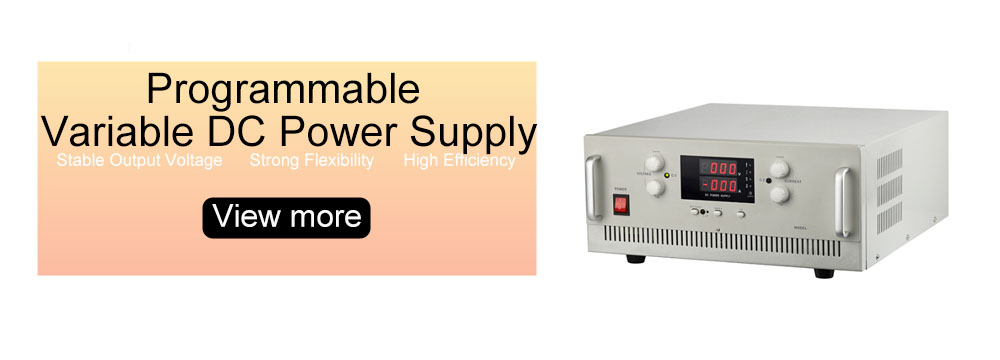
When choosing an adjustable power supply, users often struggle between linear and switching types— the former is known for stability, while the latter stands out for high efficiency. However, the adaptation differences in niche scenarios are often overlooked. In fact, putting aside the competition for popular parameters and combining your own usage scenarios with troubleshooting needs is the key to selecting a truly reliable adjustable power supply.
1. Linear Adjustable Power Supplies: Stability First, for Precision Scenarios
The core advantage of linear adjustable power supplies lies in low output ripple and minimal noise. Inside the power supply, voltage and current are regulated through linear voltage stabilization principles, causing extremely little interference to the load. Such adjustable power supplies are more suitable for scenarios requiring high power supply precision, such as laboratory precision component testing, sensor calibration, and low-noise circuit debugging. They can effectively avoid experimental data deviations caused by voltage fluctuations.
Troubleshooting Tips: A shortcoming of linear adjustable power supplies is low efficiency—they tend to heat up during long-term high-load operation. If output voltage drift occurs, first check whether heat dissipation is unobstructed to prevent triggering the protection mechanism due to overheating. For example, the linear adjustable power supplies from IDEALPLUSING feature more reasonable heat dissipation structure designs; even during long-term operation, they can maintain stable output and reduce drift issues. Additionally, linear adjustable power supplies are usually larger in size, so if installation space is limited, you need to reserve a placement area in advance.
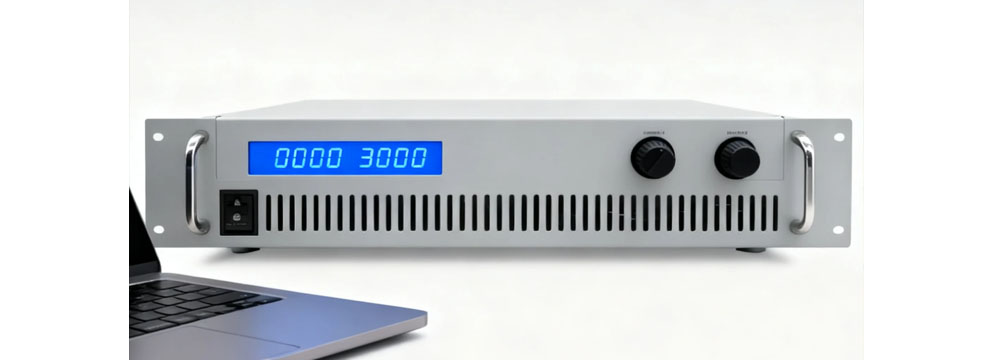
2. Switching Adjustable Power Supplies: High Efficiency & Portability, for Dynamic Scenarios
Switching adjustable power supplies adopt high-frequency switching conversion technology, with an efficiency generally above 85%. They not only consume less energy but also are compact and highly portable. Their core advantage is strong adaptability to load changes, making them suitable for industrial equipment power supply, mobile testing scenarios, and high-power equipment debugging. They can maintain stable output even when voltage and current are adjusted frequently.
Troubleshooting Tips: A potential issue with switching adjustable power supplies is relatively higher output ripple. If used in noise-sensitive scenarios, an additional filter module is required. If the load suddenly powers off, it is most likely that the overcurrent protection has been triggered—you can check whether the load is short-circuited or appropriately increase the overcurrent protection threshold. In addition, low-quality switching adjustable power supplies are easily affected by power grid fluctuations; when purchasing, pay attention to anti-interference performance to avoid load damage caused by sudden voltage changes.
3. Choosing the Wrong Scenario = Wasting Money! 3 Key Points to Avoid Pitfalls
Many users blindly pursue popular parameters but ignore scenario adaptability: Using a switching adjustable power supply for precision experiments will affect test results due to ripple issues; using a linear adjustable power supply in industrial scenarios will increase usage costs due to low efficiency and severe heating.
The core of avoiding pitfalls is: Prioritize the precision requirements and load characteristics of the usage scenario, then select based on the troubleshooting difficulty of the adjustable power supply. Linear adjustable power supplies are easy to maintain, with faults mostly concentrated in heat dissipation and power modules; switching adjustable power supplies have relatively complex structures, requiring attention to anti-interference and protection functions. Regardless of which type you choose, avoid products with false power labeling and shoddy heat dissipation designs—this will help reduce troubles in subsequent use.