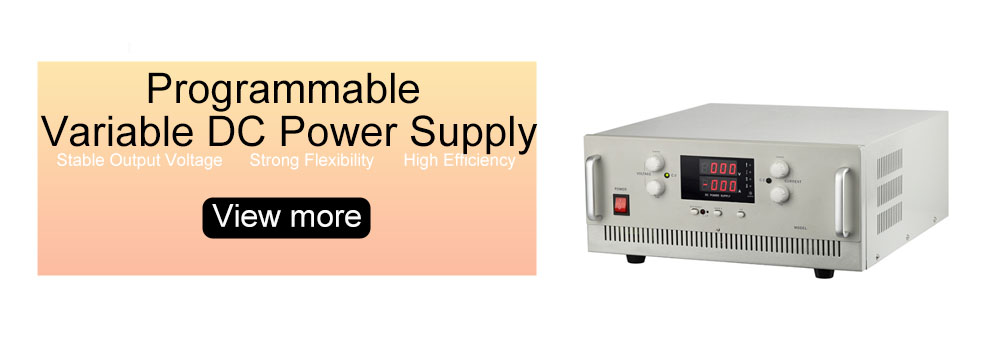
When selecting an adjustable DC power supply, the specification sheet is the core reference, but the dense professional terms make many people hesitant. In fact, as long as you understand key indicators such as voltage/current adjustment range, resolution, accuracy, ripple and noise, load regulation rate, and line regulation rate, you can quickly determine whether the power supply meets your needs. Below is an analysis of the practical significance of core parameters, combined with usage scenarios and troubleshooting, to teach you how to accurately evaluate the quality of an adjustable power supply.
Basic Core Indicators: Adjustment Range and Resolution
The voltage/current adjustment range is the most intuitive parameter, determining the type of load the power supply can adapt to—for example, a 3V-30V voltage range is suitable for small electronic devices, while a high-voltage power supply is suitable for industrial testing scenarios. However, it should be noted that the nominal range is not fully available; the accuracy of some power supplies will decrease in the low-voltage section.
Resolution reflects the precision of adjustment. For example, a voltage resolution of 0.1mV means microvolt-level fine-tuning is possible, which is crucial for testing precision components. For instance, the adjustable DC power supplies from IDEALPLUSING have a voltage resolution of up to 0.01mV, which can meet the needs of high-precision experiments. If you find that parameters cannot be locked accurately during adjustment, it is likely due to insufficient resolution or knob aging, and calibration or replacement should be performed in a timely manner.
Stability Indicators: Accuracy, Line Regulation, and Load Regulation
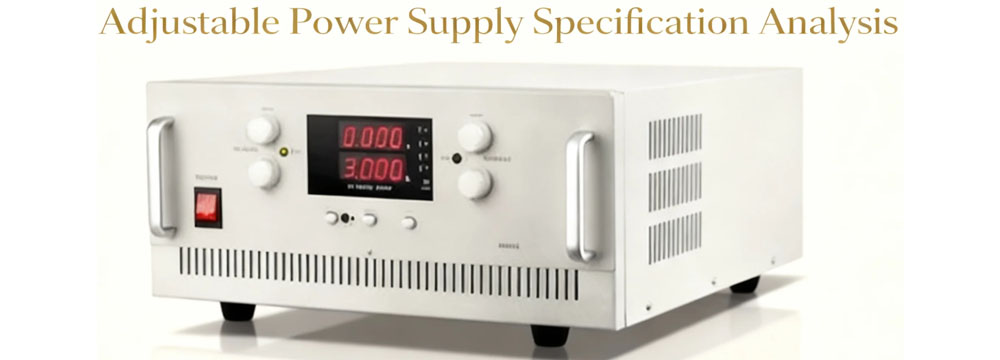
Accuracy directly affects the reliability of test data, including static accuracy and dynamic accuracy. The former is the error under no-load conditions, while the latter is the accuracy fluctuation when the load changes. Beginners tend to ignore dynamic accuracy, leading to data distortion during actual use.
Line regulation rate reflects the impact of input voltage fluctuations on the output; the smaller the value, the more stable it is. For example, ±0.01%/V means that for every 1V change in input voltage, the output error is only 0.01%. Load regulation rate is the output stability when the load current changes. Inferior power supplies will experience voltage drift when the load changes suddenly, which may burn sensitive components. During troubleshooting, if the output voltage changes significantly with the load, it is necessary to check whether the regulation rate parameters meet the standards.
Interference and Protection Indicators: Ripple Noise and Protection Functions
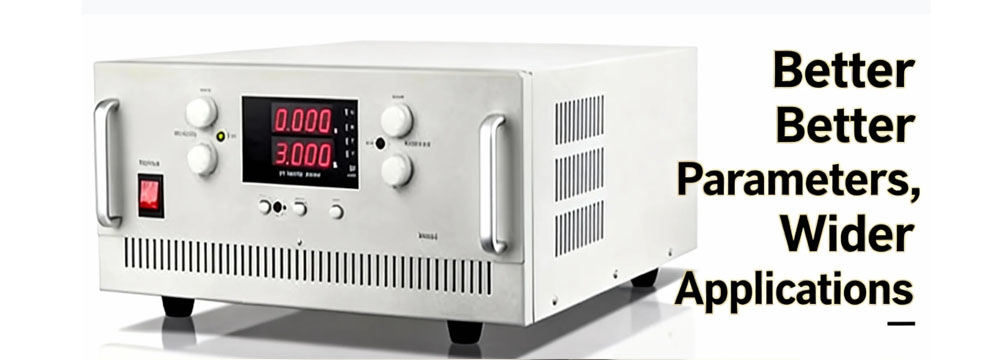
Ripple and noise are clutter signals of the power supply output. A low-ripple power supply can avoid interfering with sensitive components such as sensors and single-chip microcomputers, usually measured in mVpp (peak-to-peak value); the smaller the value, the better. If signal interference occurs during equipment debugging, you can first check whether the power supply ripple exceeds the standard.
Overvoltage, overcurrent, and overtemperature protection functions are safety guarantees. The adjustable range of protection thresholds should be clearly specified in the parameter sheet—flexibly adjustable protection functions can adapt to different load requirements. In addition, the protection response speed is also crucial; high-quality power supplies can cut off the output in milliseconds to avoid the expansion of faults.
There is no need to pursue extreme parameters during selection; it is necessary to combine usage scenarios: ordinary electronic production focuses on adjustment range and basic protection, while precision testing requires attention to resolution, accuracy, and low ripple. Choosing brands like IDEALPLUSING that focus on the consistency of core parameters can make selection more worry-free.