
In the industrial power supply field, the reliability of DC-DC converters often depends on the hidden process details of manufacturing—those precision operations that are not widely discussed are precisely the core differentiator between ordinary and high-stability products. The following five key manufacturing processes, from component placement to finished product protection, directly determine the long-term performance of DC converters under complex operating conditions.
I. SMT Placement: Precise Alignment of 01005 Ultra-Miniature
Components In the circuit integration of DC-DC converters, the key to SMT placement is not simple placement, but the precise alignment control of 01005-sized (0.4mm × 0.2mm) ultra-miniature resistors and capacitors. These components have a pin pitch of only 0.2mm; if the placement offset exceeds 0.05mm, it will directly cause the voltage regulation accuracy deviation of the DC converter to exceed ±1%. The process requires the use of a vision positioning system (positioning accuracy ±0.01mm) and flexible nozzles (to avoid component damage) to ensure that each component is completely aligned with the pad, laying the foundation for subsequent circuit stability.
II. Precision Pin Forming: Bending Control with 0.1mm Tolerance
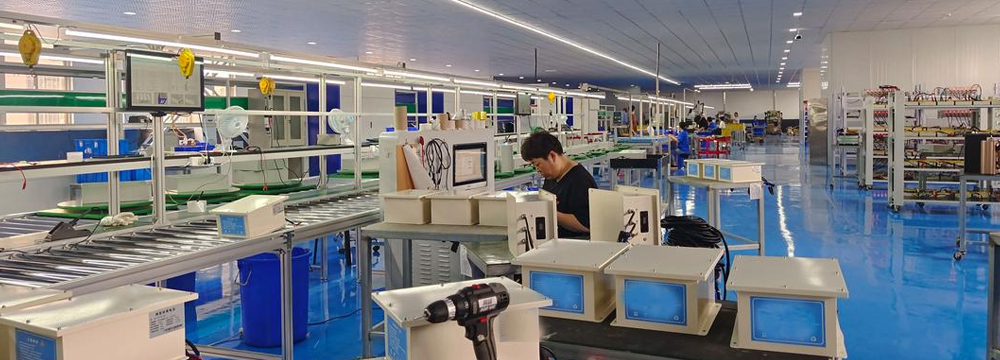
The external pins of the DC-DC converter are the key interface for current transmission, and their forming process requires strict control of bending angles and tolerances. A CNC bending machine (with a repeatability of ±0.02mm) is used to control the radius of the arc at the pin bend within 0.3mm, while avoiding stress concentration on the pins. If the bending tolerance exceeds 0.1mm, it will cause misalignment with the circuit board holes during insertion, leading to increased contact resistance and localized overheating of the converter over long-term use.
III. Vacuum Reflow Soldering: Optimized Solder Joint Forming in an Oxygen-Free Environment
The core of the reflow soldering process is to reduce solder oxidation through a vacuum environment (oxygen content <50ppm). If an oxide layer exists on the power transistor solder joints of the DC-DC converter, it will cause increased solder joint impedance, affecting energy conversion efficiency. The process requires phased temperature control: the preheating stage (150℃, 60s) removes flux volatiles, the reflow stage (235℃, 30s) ensures complete solder wetting, and the cooling stage (cooling rate 5℃/s) prevents micro-cracks in the solder joints.
IV. Ultrasonic Welding: Customized Frequency Metal Interface Fusion
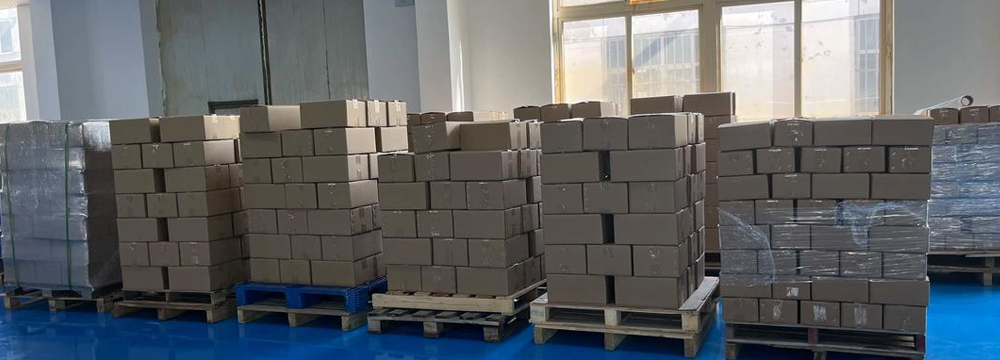
In the power terminal connections of DC-DC converters, ultrasonic welding (frequency 20-40kHz) is more reliable than traditional soldering. Its principle is to use high-frequency vibration to cause microscopic plastic deformation of the metal contact surface, forming a solderless metallurgical bond. IDEALPLUSING, in its high-reliability DC-DC converter production, optimizes the metal crystallinity of the welding interface by customizing a 35kHz ultrasonic frequency, reducing the risk of cold solder joints and increasing the terminal tensile strength to over 150N.
V. Conformal Coating: Uniform Coverage Process of Nanoscale Coating
The final protective process focuses on the uniformity of the conformal coating (acrylic material). A spraying robot (using atomized particles with a diameter of 5-10μm) is used to form a 30-50μm thick coating on the PCB surface of the DC-DC converter, focusing on covering components such as capacitors and inductors that are susceptible to environmental influences. The coating must be bubble-free and free of missed areas to ensure the converter is protected from moisture and dust corrosion in a temperature and humidity cycling environment of -40℃ to 85℃, extending its trouble-free operating time.
While these five processes are not widely discussed, they directly determine the upper limit of the DC-DC converter's reliability. For industrial users seeking long-term stability, paying attention to these manufacturing details is more practically meaningful than simply comparing parameters.
Share our interesting knowledge and stories on social media