
Adjustable DC power supplies are indispensable tools in electronic practical operations, but many people have stumbled into pitfalls like component scrapping and equipment failure due to ignoring operational details. These mistakes often stem from habitual operations but can lead to irreversible losses. Below, combined with real cases of falling into pitfalls, we analyze three easily overlooked "invisible pitfalls" and share specific avoidance methods to help you use adjustable DC power supplies safely.
1. Pitfall 1: Missing Current Limit Setting, Sensitive Components "Scrapped Instantly"
Many people only focus on voltage adjustment when using adjustable DC power supplies, directly adjusting the voltage to the target value and completely omitting the current limit setting step. Once the power supply's output current exceeds the component's tolerance threshold—especially for components with poor current resistance such as MOSFETs and precision sensors—they will be directly broken down and burned, with no room for recovery.
Correct Approach: First confirm the rated current through the component manual or multimeter, adjust the current limit of the adjustable DC power supply to about 1.1 times the rated value, then slowly increase the voltage from zero. For example, when powering a component with a rated current of 250mA, first set the current limit to 275mA, and put it into use only after the voltage rises to the target value and the current stabilizes. If the adjustable DC power supply triggers overcurrent protection, first check if the component is short-circuited or if parameters mismatch, do not blindly increase the current upper limit.

2. Pitfall 2: Careless Polarity Check, "Dual Damage" to Power Supply and Equipment
Judging the positive and negative poles by experience during wiring and powering on without careful verification is a mistake that both beginners and experienced users are prone to make. After reversing the positive and negative poles of the adjustable DC power supply, it will not only directly burn out polarity-sensitive components such as diodes and integrated circuits but also damage the internal rectifier bridge and protection circuit of the power supply, leading to complete failure of the adjustable DC power supply.
Correct Approach: Before wiring, first find the component polarity marks (such as the "-" mark on the capacitor shell, the positive and negative silk screen on the circuit board), then connect to the red (positive) and black (negative) terminals of the adjustable DC power supply accordingly. If the component has no clear identification, first use the multimeter diode mode to detect the polarity, or use the adjustable DC power supply to test with 1V low voltage and small current, observe whether the component works normally, and power on officially only after confirming the polarity is correct.
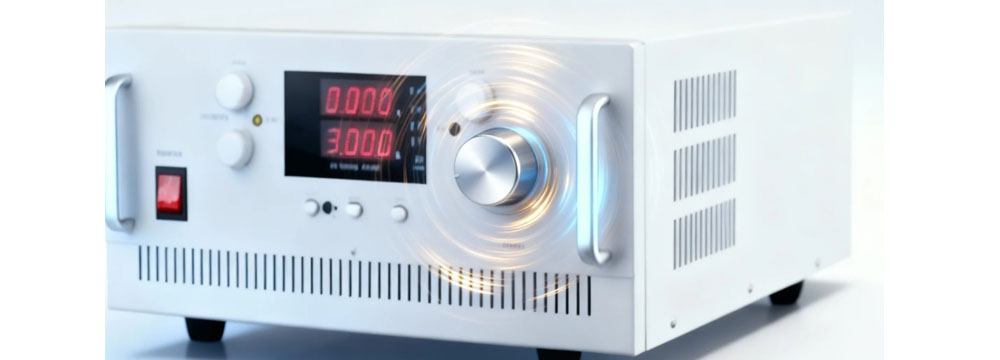
3. Pitfall 3: Ignoring Heat Dissipation Space, Power Supply Frequent "Protective Shutdowns"
When using an adjustable DC power supply at high power for a long time, many people are used to stuffing it into a cluttered toolbox or letting books and wires block the heat dissipation holes. This causes internal heat accumulation of the power supply, triggering frequent power outages due to overtemperature protection, which not only affects the operation progress but also accelerates the aging of internal capacitors and resistors, shortening the service life of the adjustable DC power supply.
Correct Approach: During use, ensure that more than 15 centimeters of heat dissipation space is reserved around the adjustable DC power supply, and avoid stacking it with heat-generating equipment such as electric soldering irons and power adapters. If continuous operation for more than 3 hours is required, pause for 15 minutes every 1 hour to allow the power supply to cool naturally. If the adjustable DC power supply body becomes severely hot or makes abnormal noises, immediately turn off the power to cool down, clean the dust in the heat dissipation holes, and use a small fan for auxiliary heat dissipation if necessary, then continue using after the temperature returns to normal.
In fact, these three "pitfalls" can all be avoided through standardized operations. The core is to keep in mind "set protection parameters first, check wiring polarity second, and pay attention to heat dissipation throughout". Developing these details into habits allows the adjustable DC power supply to play a stable role, avoiding unnecessary losses caused by operational negligence.