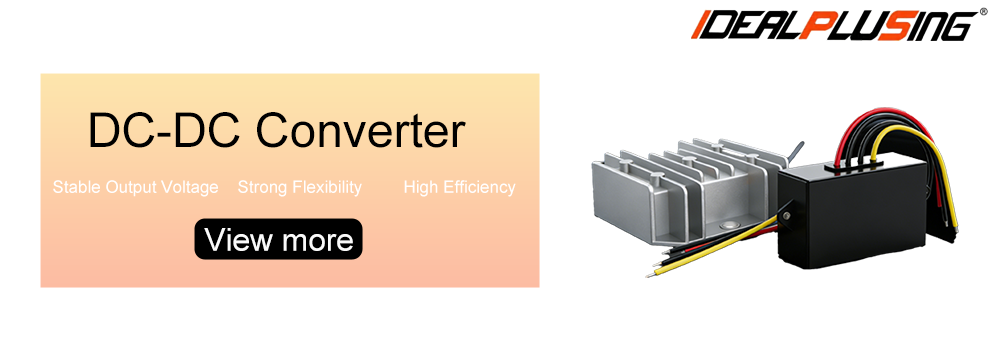
What is a DC-DC converter?
A DC-DC converter is a small device that transforms one DC voltage into another. For example, if you have a 9-volt battery but your device only requires 5 volts, you can use a converter to "convert" the 9 volts to 5 volts.
There are two main types of these converters:
Linear (e.g., LDO): Like a clever "faucet," it "wastes" excess voltage as heat. Its advantages are clean output and no noise, but its efficiency is low, making it suitable for low-power applications.
Switching type: Like a fast switch, it uses inductors or capacitors to "store" and "discharge" electricity, thereby increasing, decreasing, or vice versa. It is highly efficient and can handle high power, but the circuitry is slightly more complex and may produce some electrical noise.
There is also a type called a charge pump, which uses only capacitors to boost or buck voltage without inductors. It is small and suitable for small devices like mobile phones.
In short, a DC-DC converter is a "voltage translator," adapting the power supply to the needs of different devices.
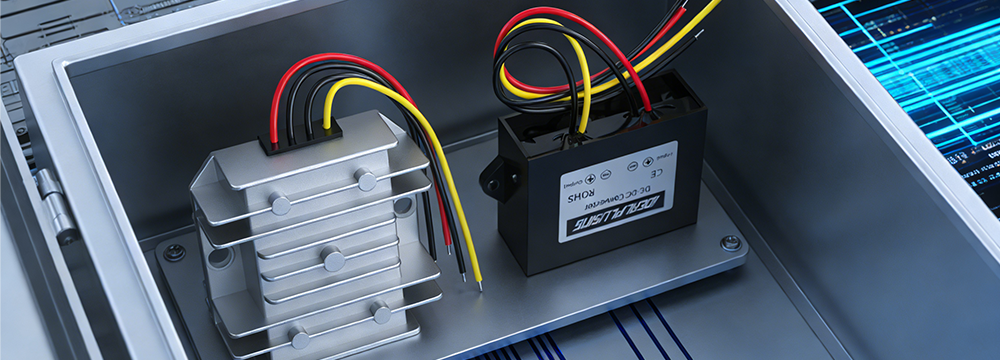
DC/DC switching power converters include a switching power stage and a control stage. Power switching transistors are generally divided into synchronous rectification and asynchronous rectification. The switching transistor itself is a power transistor that allows high current to pass through. Traditional converters are asynchronous circuits, using a power MOSFET and a freewheeling diode to achieve voltage conversion. Typically, two power MOSFETs are used as the switching transistor and the freewheeling transistor. Because the switching MOSFETs have small voltage drop and small size, efficiency can be improved while saving chip area, increasing integration and reducing cost. The energy storage devices in the circuit include inductors and capacitors. The filter circuit refers to the filters designed for input and output voltage regulation. The control circuit determines the conduction time of the switching transistor based on the output feedback voltage and the sampling current of the inductor, and achieves the correct conversion by adjusting the magnitude of the output voltage.
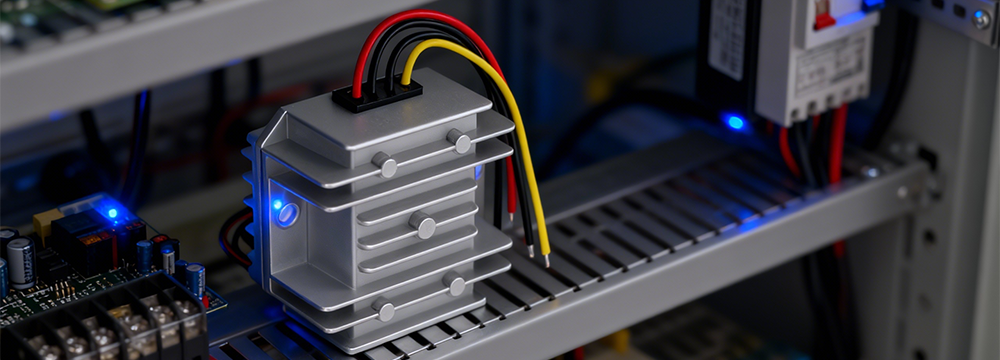
In short, choosing an ideal DC converter means finding a delicate engineering balance between high efficiency and low noise. Understanding its working principles—from the switching process of energy storage and release to precise feedback control—helps us make wiser choices based on specific application scenarios (such as audio equipment that is extremely sensitive to noise or portable products that demand maximum battery life), thus allowing electrical energy to quietly and efficiently power every circuit.
Share our interesting knowledge and stories on social media