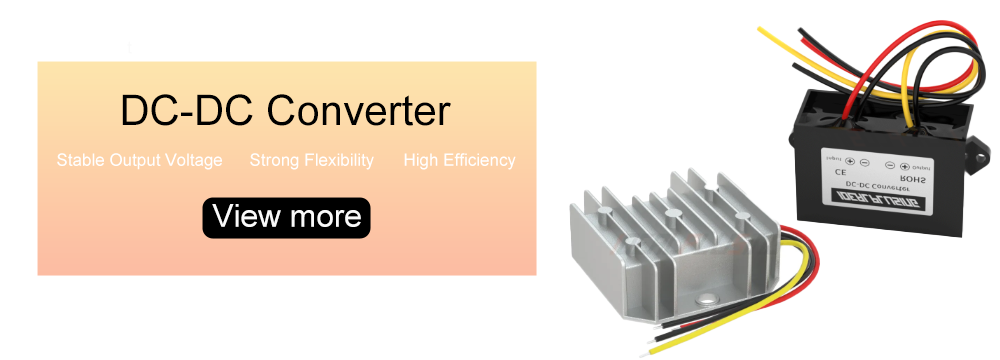
When people think of DC-DC converters, “step-up” (boost) or “step-down” (buck) functions often come to mind first. Yet their capabilities extend far beyond these basic roles. As a key component of modern power electronics, DC-DC converters use a variety of topologies. These designs are designed to meet the complex and ever-changing needs of power systems.
The classic buck and boost topologies are just the beginning. Beyond these, there are buck-boost converters - devices that can simultaneously boost and reduce voltage. In addition, there are isolated topologies, such as flyback and forward converters. For high-power applications, full-bridge and half-bridge configurations are notable. And for applications that require low ripple and high efficiency, designs such as Ćuk and SEPIC converters are preferred. Each topology is carefully designed to adapt to specific operating environments.
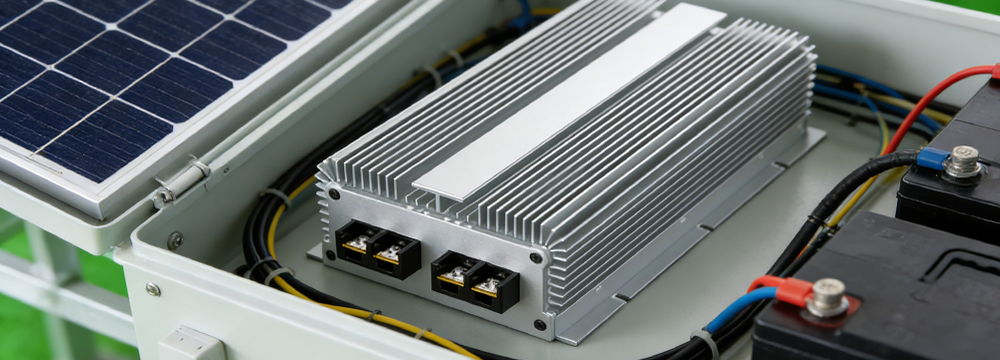
Consider these real-world applications
Buck-Boost converters shine in battery-powered devices. Stable output is maintained consistently, whether the battery’s voltage sits above or below the level required by the device.
Widely adopted in phone chargers are Flyback converters. They enable the creation of compact power supplies that feature safe electrical isolation— a critical requirement for consumer electronics.
Full-Bridge topologies are the workhorses behind electric vehicles and industrial systems. They facilitate efficient energy conversion even at scales exceeding 100kW.
In solar lighting systems, SEPIC converters ensure steady output. This stability holds true even when input voltage fluctuates, a common occurrence as sunlight intensity changes.
Nowadays, technological advances in renewable energy, artificial intelligence (AI) and the Internet of Things (IoT) are driving the advancement of DC-DC converters. The main development trends include improved energy efficiency, downsizing, improved noise immunity and intelligent control systems. Modular architectures also enable direct integration into integrated circuits (ICs), laying a solid foundation for the development of slimmer and more high-performance electronic products.
DC-DC converters exist ubiquitously in modern life. They range from smartphones we carry daily to satellites circling the Earth, and from electric vehicle (EV) charging stations to industrial electrolysis facilities.
We at IDEALPLUSING not only provide products, but also strive to provide customers with suitable power supply solutions and quotations.
Our core competitiveness lies in carefully selecting a variety of power supply options to help customers evaluate and choose the most suitable power supply solution.
we can offer AC DC power supply, DC AC inverter, AC AC power source(single phase or 3 phases),AC DC Ground Power Unit...
Share our interesting knowledge and stories on social media