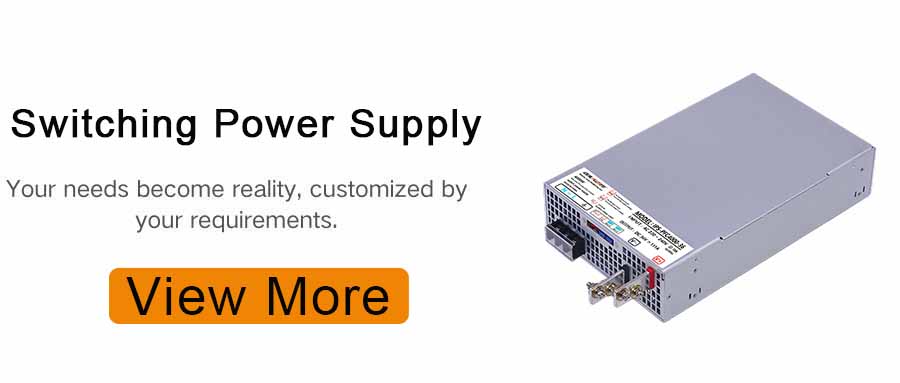
In the power supply circuits of industrial automation equipment, fast charging modules for consumer electronics, and even the power conversion stages of new energy storage systems, switching power supplies always play a core role, and their performance directly affects the operational stability of terminal equipment. The dynamic response time of a switching power supply, a key indicator of its ability to handle sudden load changes, is often overlooked but profoundly impacts the actual user experience. Whether the switching power supply can quickly bring the output voltage back to a stable range when the load suddenly increases or decreases is the core manifestation of dynamic response time. If the dynamic response of the switching power supply is poor, it can lead to data fluctuations in precision instruments at best, and cause equipment hardware damage at worst. Therefore, solving this problem is crucial for the suitability of switching power supplies in various application scenarios.
The Importance of Switching Power Supply Dynamic Response Time
The dynamic response time of a switching power supply is not a single value, but encompasses the entire process from the sudden change to the recovery of the output voltage: when the load undergoes a step change (such as a sudden increase from 20% to 80% of the rated current), the output voltage of the switching power supply will briefly deviate from the rated value, and then return to stability through the adjustment of its control loop. The duration of this recovery process is the dynamic response time. The requirements for this parameter vary significantly in different scenarios: for example, the switching power supply in a medical monitor needs to maintain a millisecond-level response during load fluctuations to ensure accurate monitoring data; if the dynamic response of the switching power supply supporting an industrial servo drive is delayed, it may lead to a decrease in motor operation accuracy. Therefore, dynamic response time is an important consideration for adapting switching power supplies to diverse application scenarios.
Reasons for Poor Dynamic Response in Switching Power Supplies
The reasons for poor dynamic response in switching power supplies are often related to imbalances in parameter matching during the design phase. First, improper compensation network design: the control loop of the switching power supply relies on the compensation network to stabilize gain and phase. If the selected Type I compensation network cannot offset the influence of the output capacitor's poles, it will result in insufficient loop bandwidth, thereby extending the dynamic response time. Second, insufficient adaptation to load characteristics: when the switching power supply faces capacitive or inductive loads, if the current limiting parameters are not adjusted accordingly, output voltage overshoot or undershoot may occur during sudden load changes, indirectly manifesting as poor dynamic response. Furthermore, component selection deviations can also hinder response speed. For example, using a low-bandwidth operational amplifier as the feedback core, or selecting output capacitors with high equivalent series resistance (ESR), will slow down the adjustment efficiency of the switching power supply.
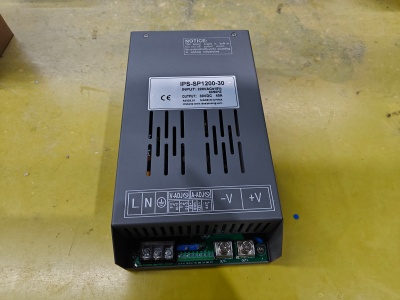
Strategies for Optimizing Poor Dynamic Response in Switching Power Supplies
To address the above issues, the dynamic response of switching power supplies can be improved through a three-step practical method. The first step is to optimize the compensation network: select a suitable compensation type based on the switching power supply topology. For example, a Buck topology switching power supply can use a Type III compensation network, increasing the phase margin by adding zeros to shorten the response time; simultaneously, use simulation tools to scan compensation resistor and capacitor parameters to find a balance between stability and response speed. The second step is dynamic adaptation to load characteristics: incorporate a load identification algorithm into the switching power supply control program to monitor load current changes in real time. Once a sudden change is detected, the PWM duty cycle is automatically adjusted to reduce output voltage fluctuations. The third step is to carefully select core components: prioritize high-frequency response inductors and low-ESR capacitors. For example, replacing the output capacitor of the switching power supply with a ceramic capacitor reduces losses during voltage adjustment; simultaneously, using a high-bandwidth operational amplifier improves the efficiency of feedback signal processing.
Brands like IDEALPLUSING, which focus on switching power supply-related technologies, also incorporate similar parameter optimization ideas into their product designs, providing suitable solutions for switching power supplies in different scenarios.
The Practical Value of Dynamic Response Optimization for Switching Power Supply Applications
After optimizing the dynamic response of the switching power supply, its adaptability to various application scenarios will be significantly improved. In the consumer electronics field, the switching power supply in fast charging devices can respond faster to load changes during mobile phone charging, reducing voltage fluctuations and extending battery life; in industrial scenarios, the optimized switching power supply can provide more stable power to PLCs, reducing the probability of equipment downtime due to voltage fluctuations; in the new energy field, the switching power supply of energy storage systems can quickly respond to sudden load changes, ensuring the continuity of power output. It is clear that improving the poor dynamic response of switching power supplies is not only key to improving the performance of the switching power supply itself, but also an important guarantee for the stable operation of terminal equipment.
IDEALPLUISNG Power Expert:
We focus on the research and development, sales and services in the fields of DC-DC power modules, AC-DC rectifier modules, DC-AC inverters, AC power supplies, DC power supplies, LED power supplies, chargers, rectifier systems, etc., providing personalized, efficient, reliable and cost-effective power solutions for all walks of life.
Thank you for considering our services.