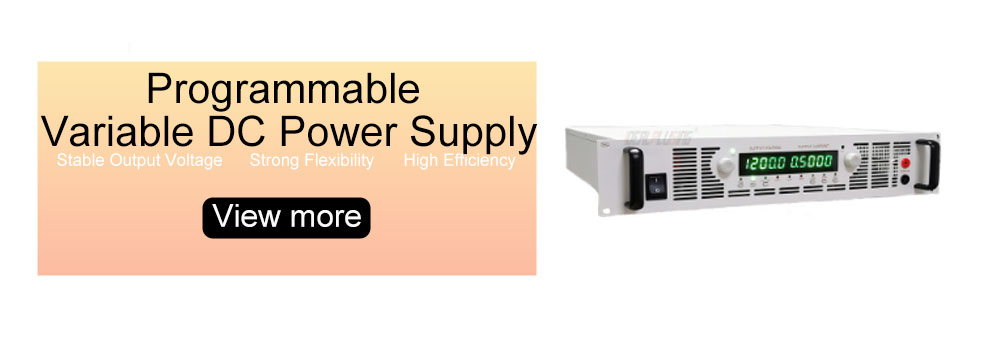
With the rapid advancement of modern electronic technology, diversified electronic devices and experimental testing equipment have been widely applied in various industries. Stable and adjustable power supply has gradually become a basic guarantee for the normal operation of all kinds of electronic equipment. As a mainstream power supply device, adjustable DC power supply features flexible parameter regulation and stable output performance. It can well adapt to the power supply needs of different electronic loads. This paper systematically expounds its application value, performance advantages and practical significance, so as to help relevant practitioners and learners form a comprehensive and standardized cognition of this kind of power supply equipment.
Basic Application Value and Functional Advantages
In the scenarios ranging from the energy replenishment of electric vehicles to the functional detection of precision sensors within laboratory environments, a multitude of contemporary electronic instruments and technical systems are dependent on a critical yet frequently overlooked core component. This pivotal component is the adjustable direct current power supply, which serves as an indispensable supporting device for diverse electrical operations. Conventional fixed voltage wall sockets are capable of outputting only alternating current, and such electrical energy exhibits unstable fluctuations that fail to meet the power supply demands of precision equipment. In contrast, adjustable direct current power supplies are engineered to convert disordered alternating current into stable, pure direct current electrical energy. This type of power supply also supports users in setting and adjusting the output voltage and current parameters precisely, in accordance with the specific operating requirements of targeted electrical appliances or experimental projects.
Practical Significance and Popularization Value
For electronic enthusiasts engaged in experimental debugging with Arduino controller modules, professional engineering technicians involved in the research and development and prototype verification of new electronic products, as well as students conducting systematic learning in the field of electronic technology, mastering the operating principles and application methods of such power supply equipment is of great significance. A clear and accurate grasp of its functional characteristics can effectively eliminate operational doubts and enhance practical operation capabilities in electronic experiments and product development. This professional interpretation document adopts a progressive and easily comprehensible analytical approach to disassemble the internal structural composition and functional operating mechanisms of adjustable direct current power supplies. The entire explanatory process does not require readers to possess advanced professional theoretical knowledge in the engineering field, enabling learners at different levels to obtain clear and systematic cognitive understanding.
What Is an Adjustable DC Power Supply?
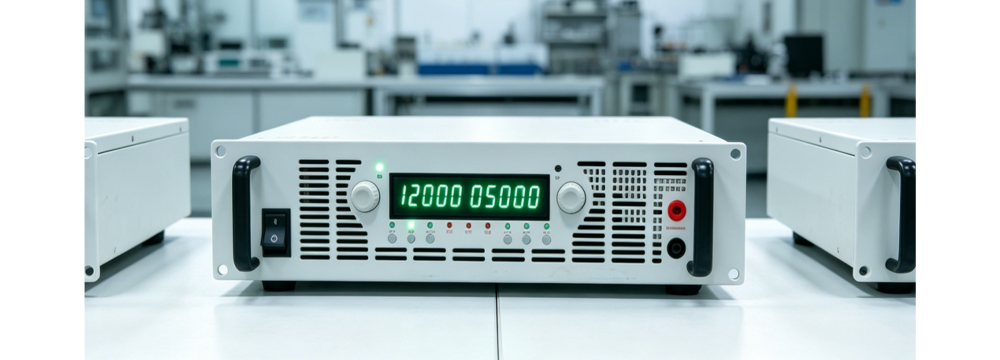
At its fundamental operational level, an adjustable DC power supply functions as a specialized electrical signal converter. It can be regarded as an intelligent translator that bridges the gap between grid power and the power required by electronic devices. It receives unstable and high‑voltage alternating current input from standard wall‑mounted power sockets. Subsequently, it performs a series of stable conversion and regulation processes on this disordered electrical energy. It ultimately transforms the input power into accurate, stable, and low‑voltage direct current that matches the operating requirements of the target device. This power supply can be metaphorically defined as a tailor dedicated to electrical energy regulation. Unlike traditional tailors who cut and shape textile materials, this device precisely adjusts and optimizes electrical energy indicators. It trims and shapes electrical energy according to the strict power input standards of different electronic components. The term “adjustable” represents one of the core functional characteristics of this type of power supply. It indicates that users can manually intervene in the output state of the power supply through human‑machine interaction methods. These methods include rotating a control knob or pressing a function button to complete parameter setting. Through such operations, users can independently modify two key physical parameters of the output power. The first parameter is voltage, which is defined as the driving potential that promotes the directional movement of electrons inside a circuit. The standard unit for measuring voltage is the volt. The second parameter is current, which refers to the actual flow rate of electrons passing through a specific cross‑section of a conductor. The standard unit for measuring current is the ampere. In practical application scenarios, different devices have completely different power requirements. An adjustable DC power supply can flexibly respond to all the above power demands.
Step 1: Taming the Wall Power (AC Input & Transformation)
Standard electrical wall sockets provide alternating current (AC) with a rated voltage of typically 120 volts or 240 volts. This form of electrical energy exhibits strong fluctuations and high amplitude characteristics, making it excessively harsh and unstable for utilization by precision-sensitive electronic components and integrated circuits. Consequently, the primary and most critical functional task of a direct current (DC) power supply is to condition and stabilize this raw utility power. The power supply must first suppress the volatility inherent to grid-supplied alternating current before subsequent processing can be safely performed.
The conditioning process begins with the deployment of a transformer, which serves as the initial stage component within the power supply system. A transformer is structurally composed of a ferromagnetic core material tightly wound with insulated copper conductor coils. This electromagnetic device operates based on the fundamental physical principle of electromagnetic induction, which governs energy transfer between isolated circuits. When alternating current passes through the primary winding of a transformer, it will produce a varying magnetic field inside the iron core structure. This kind of magnetic field presents periodic changing characteristics along with the variation of input current.The generated alternating magnetic field can penetrate and act on the secondary winding part of the device. It is able to induce corresponding potential difference signals at both ends of the secondary winding circuit.By virtue of this electromagnetic inductive coupling effect, the transformer can realize the reduction of input voltage amplitude. It finally outputs low-level alternating current voltage that meets safe use standards.Taking common step-down transformers in practical application as research examples, such devices can access 240-volt industrial grid alternating current. They are capable of converting such high input voltage into relatively low alternating current voltage signals such as 24 volts. This reduced voltage magnitude falls within a range that can be reliably and safely handled by even the most delicate and voltage-sensitive electronic circuits and microelectronic devices.
Step 2: Turning AC into Rough DC (Rectification)
Alternating current (AC) can be analogically described as a wave-like form of electrical energy. In this form, electrons do not flow in a fixed direction but instead oscillate back and forth periodically, with a typical frequency range of 50 to 60 hertz. Electrons maintain a stable unidirectional movement state within direct current circuits. Such directional movement will not produce the periodic direction shift phenomenon existing in alternating current.Power supply equipment needs to complete the conversion work between two kinds of currents in actual operation. They possess distinctive unidirectional conduction properties for internal current transmission.This component permits the smooth passing of current along the specified conduction direction. This standardized assembly structure is defined as a bridge rectifier circuit.This rational structural layout can greatly improve the overall conversion efficiency of electric energy. It steadily fulfills the technical demand of converting alternating current into direct current.
A bridge rectifier is typically composed of four diodes arranged in a square-shaped circuit structure. When alternating current is input into this rectifier circuit, the diodes exert their one-way conduction characteristic to block the reverse flow of electrons during each half-cycle of the AC signal. This unidirectional blocking effect forces the electrons to move in a single, consistent direction throughout the circuit. The immediate result of this rectification process is a non-smooth, uneven DC signal, which is referred to in technical terminology as "pulsating DC." This pulsating signal is still characterized by significant fluctuations, manifesting as distinct peaks and troughs in voltage amplitude. And although such pulsating current represents a step forward compared to the original AC—since it eliminates bidirectional oscillations—it remains insufficiently smoothed to satisfy the power supply stability requirements demanded by precision electronic devices.
Step 3: Smoothing Out the Bumps (Filtering)
Smoothing Out the Bumps (Filtering)
To eliminate the obvious voltage peaks and troughs that are typical of a pulsating direct current (DC) signal, a regulated DC power supply is equipped with a crucial electronic component, namely the capacitor. Its core function is to collect and retain electrical energy within its internal structure during the operation of the power supply system. This energy storage process can be analogically compared to the working mode of a miniature rechargeable battery, which also stores energy for subsequent release when needed.
In the actual operation process of the regulated DC power supply, the capacitor works in conjunction with the pulsating DC signal in a coordinated manner. When the voltage of the pulsating DC signal rises to its maximum peak value, the capacitor immediately starts its energy storage work, quickly absorbing and storing the excess electrical charge generated at this peak stage.
On the contrary, when the voltage of the pulsating DC signal decreases to a lower trough level, the capacitor will reversely release the electrical charge it has previously accumulated. This charge release process effectively compensates for the voltage drop in the pulsating signal, thereby maintaining a relatively stable voltage output state and laying a foundation for the subsequent voltage regulation process.
To illustrate the operating principle of a capacitor in this process, a visual analogy proves useful. Imagine a water reservoir connected to a river characterized by an unstable flow—marked by frequent fluctuations between high water levels (floods) and low levels (droughts). This reservoir serves to collect and store excess water during periods of flooding, thereby preventing overflow and loss. During periods of drought, when the river's water level drops, the reservoir releases its stored water, thereby ensuring a continuous and steady flow. In precisely the same way, a capacitor within a power supply system transforms an unstable, pulsating direct current into a significantly smoother form of direct current—technically referred to as "pulsating DC". This ripple DC is close to the ideal steady DC flow required by electronic devices, though it still retains tiny, negligible voltage wobbles that do not affect normal device operation.
Step 4: Dialing in Precision (Regulation)
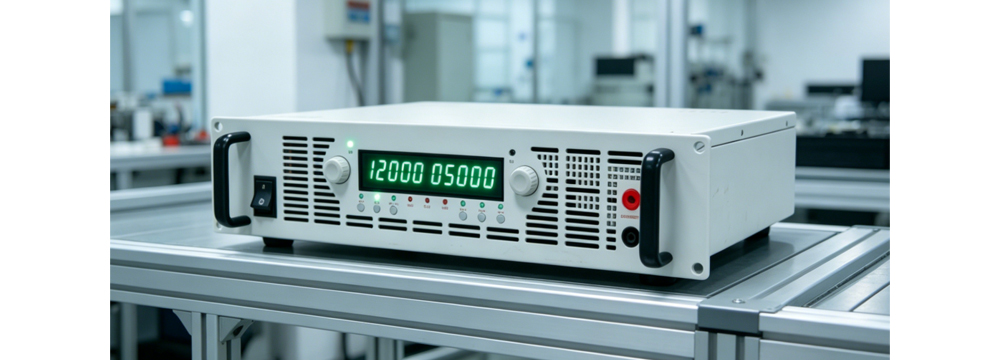
This stage realizes the core adjustable performance of the direct current power supply system. The equipment is equipped with a dedicated voltage regulation module to fix and maintain the preset output voltage value. Common core control components of such modules include buck converter chips and linear regulator chips.
When users preset the rated output voltage at 12 volts, the built-in voltage regulator will perform real-time monitoring work. It continuously compares the actual output voltage value with the preset standard voltage parameter. Once the actual output voltage rises beyond the set value caused by external power fluctuation interference, the regulator will limit the internal energy transmission efficiency to lower the output voltage level. When the load device increases power consumption and leads to voltage drop, the regulation structure will expand the power transmission range to raise the output voltage. This closed-loop feedback regulation mechanism can effectively stabilize the final output voltage state. It can maintain stable output performance even under the condition of grid voltage fluctuation or variable load current demand.If users need to switch to 5 volts and other different voltage specifications, simple parameter adjustment can complete the setting operation. Users only need to fine-tune the built-in potentiometer which belongs to a type of variable resistor. This operation can change the internal reference signal of the voltage regulator, so as to adjust the power regulation range and achieve accurate output of new target voltage parameters.
Step 5: Staying Safe (Protection Circuits)
Circuit damage caused by abnormal electrical operation must be effectively avoided. For this purpose, adjustable DC power supplies are integrated with multiple inherent safety protection functions.Overcurrent protection can take effect when load equipment absorbs excessive current. It will instantly disconnect power supply once faults such as short circuits occur.Overvoltage protection serves as secondary safety guarantee. It will cut off the whole circuit when voltage surge appears due to regulator malfunction.Thermal protection mechanism monitors internal operating temperature in real time. The device will suspend working automatically and resume operation after sufficient heat dissipation.
Adjustable DC power supplies are far more than simple devices equipped with regulating knobs. They belong to high-precision electrical instruments that realize effective matching between municipal grid power and daily-used precise electronic equipment.Such devices can complete voltage reduction treatment and AC-DC electrical energy conversion. They are also capable of suppressing voltage ripples and stabilizing output parameters, so as to realize effective regulation of power supplied to electronic loads.
People can apply this equipment in robot assembly production and old radio maintenance work. It also satisfies the learning needs of personnel who intend to explore electronic operation principles. Mastering its working principles helps users fully grasp the usage method of such power equipment.When users operate the voltage regulating structure of the power supply, they are not merely changing numerical parameters. They are actually realizing reasonable control over the directional movement law of internal electrons inside the circuit system.